Project Factsheet
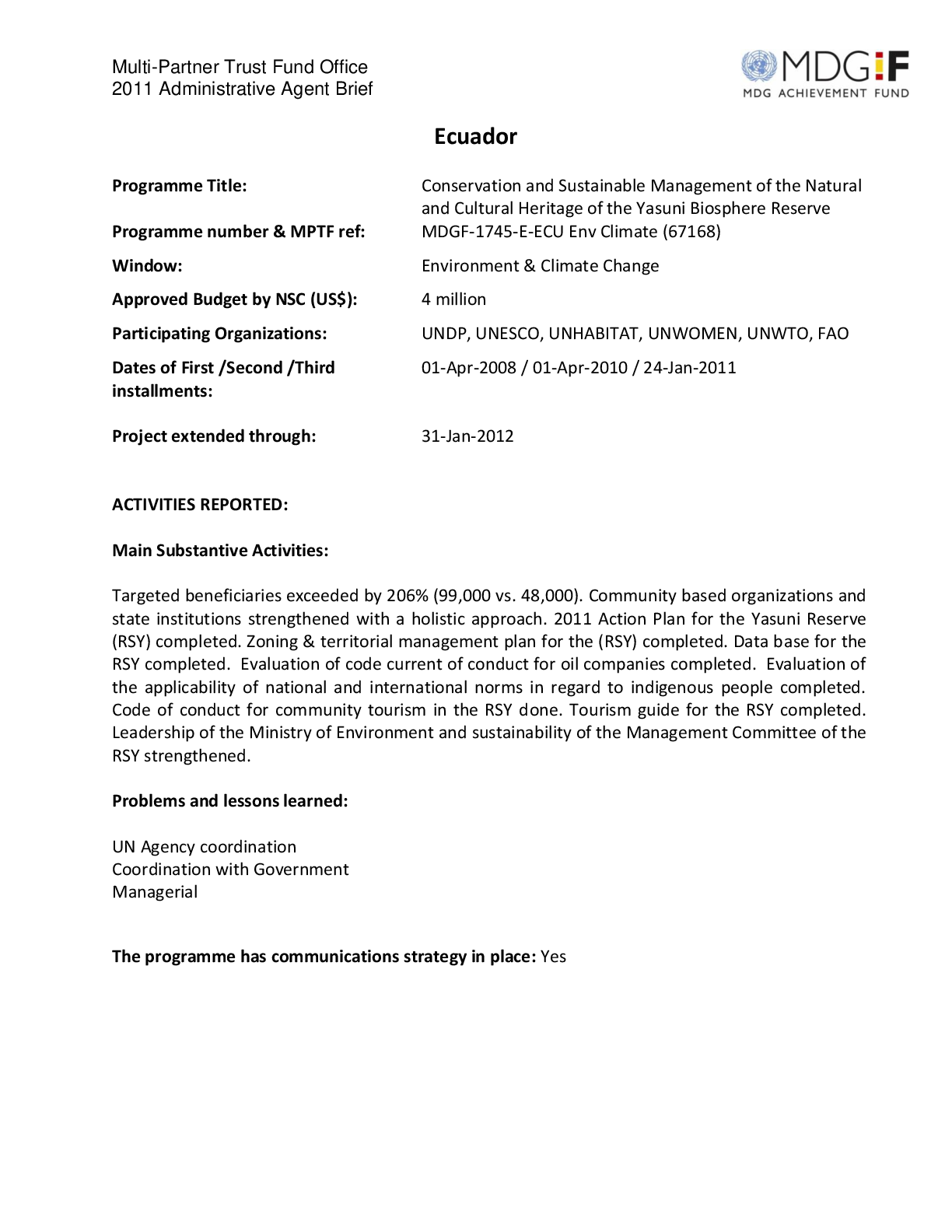
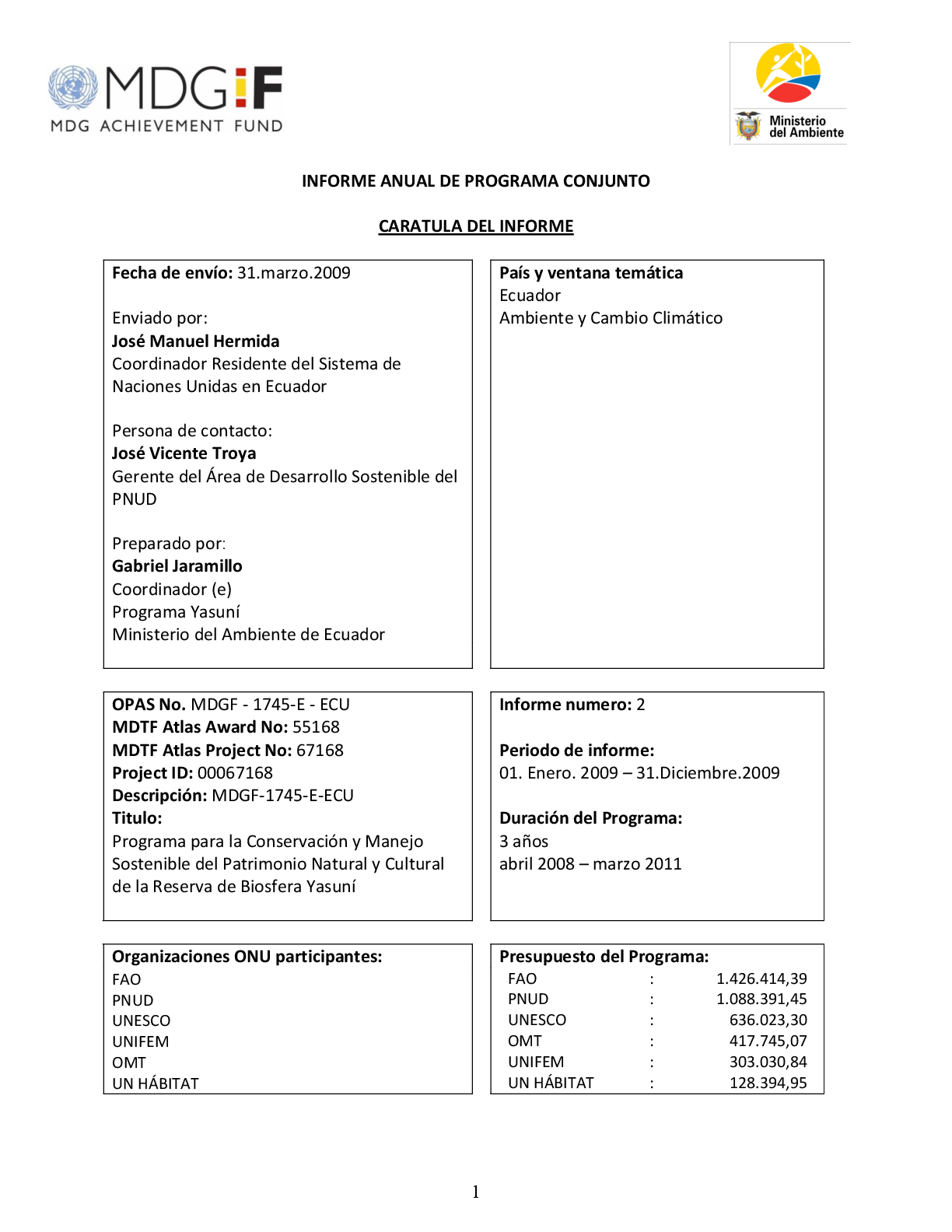
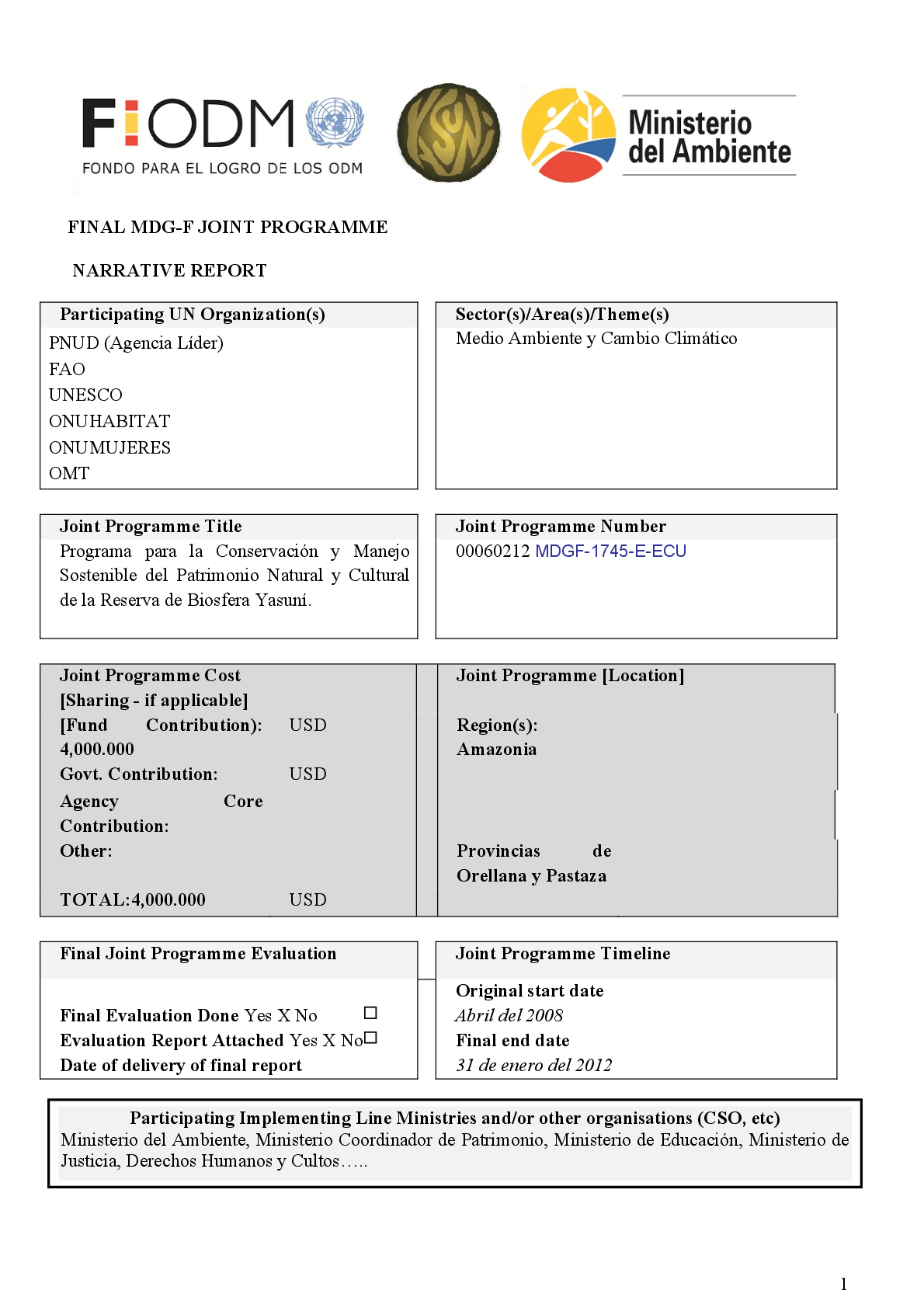
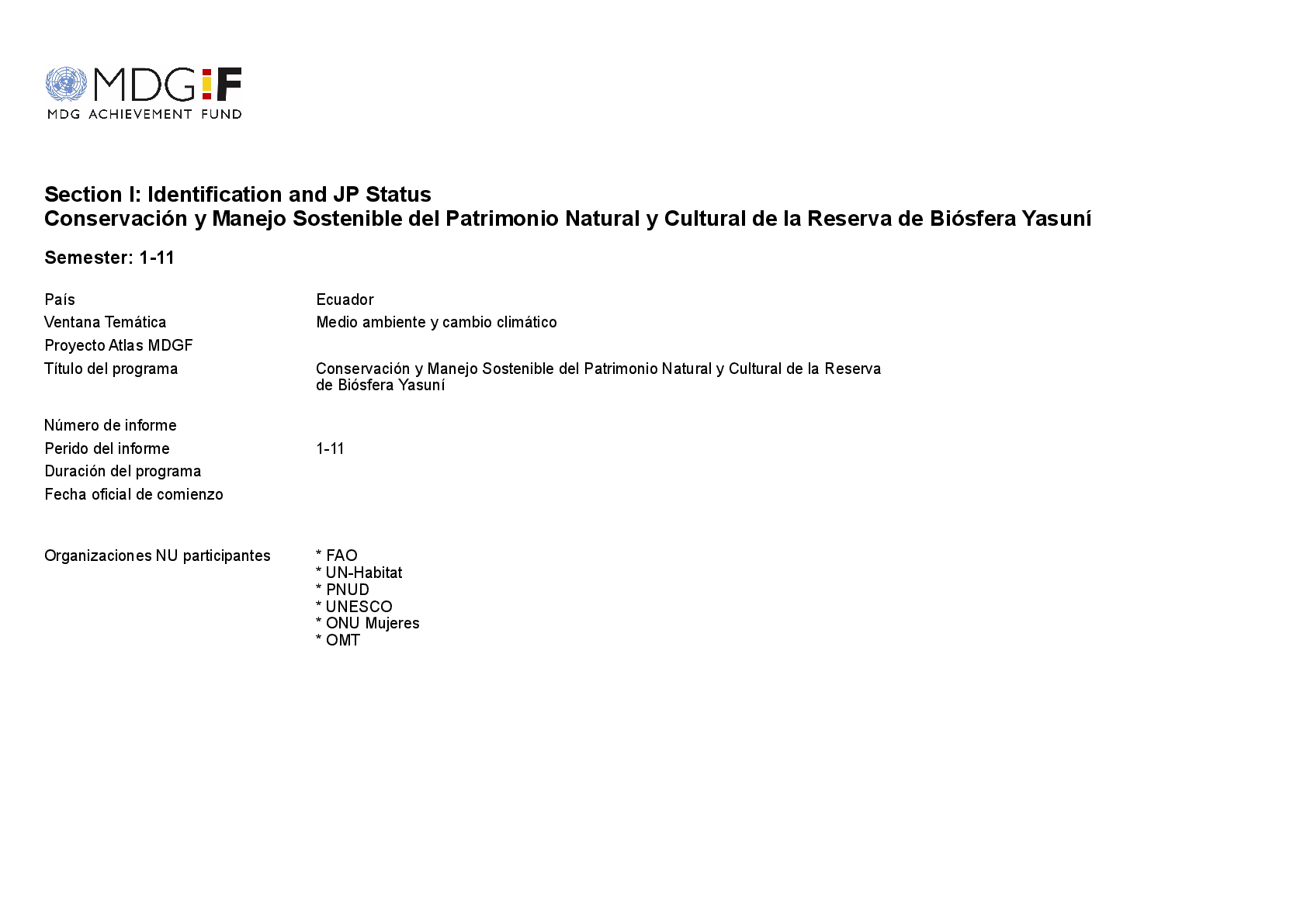
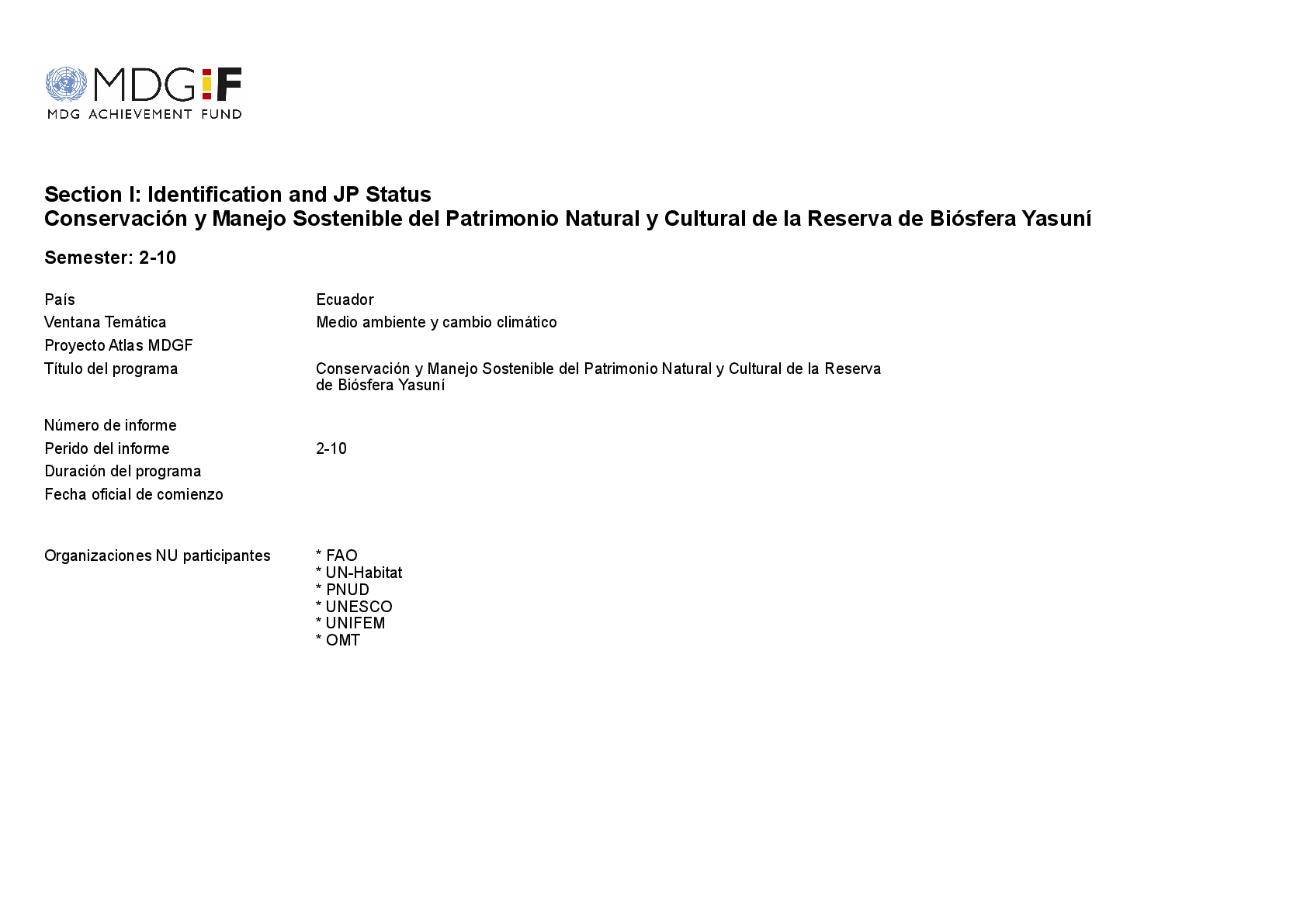
Tools for » Conservation and Sustainable Management of the Natural and Cultural Heritage of the Yasuni Biosphere Reserve
Project ID 00067168 Description MDGF-1745-E-ECU Env Climate
Fund Start date * 2 Oct 2007
Theme
MDGF Environ Climate Chg
Project status On Going
Country Ecuador Participating Organization Multiple
About

The Programme aims to support the sustainable conservation and management of the natural and cultural heritage of the Yasuní Biosphere Reserve (YBR). This will enable progress towards MDG 7: ensuring environmental sustainability, by helping to conserve one of the world’s most biologically and culturally diverse areas through environmentally sustainable economic alternatives based on the community-based management of biodiversity and forest resources. This will be complemented by supporting national actions to establish tools to address climate change as part of the post-Kyoto framework and promote a post-oil economic model.  The Programme will enable progress towards achieving MDG 1: reducing poverty, by promoting community-based biodiversity and natural resource management for vulnerable populations in order to create environmentally sustainable livelihoods. It will also help protect the rights of indigenous peoples living in voluntary isolation (PVIs) in the YBR.

The preservation and sustainable management of the YBR’s natural and cultural heritage is one of the Government of Ecuador’s national priorities and has been made part of national public policy. Another declared national priority is the non-exploitation of the Ishpingo-Tambococha-Tiputini (ITT) oil field, an objective that is to be carried out through a government initiative to leave crude oil in the ground and protect PVIs.

In line with these priorities, the resources to be obtained from the Millennium Development Goal Achievement Fund (MDG Fund) will focus on:

  1. Supporting the implementation of national and local government policies aimed at conserving and managing the YBR, such as those related to the integral management of the Reserve’s territory, strengthening capacities to control the negative effects of large-scale economic activities, national strategies and policies to protect PVIs and the country’s initiative to leave crude oil in the ground.
  2. Managing the YBR with a focus on conservation, sustainable community-based cultural and natural heritage management and environmental quality improvement, including the provision of support for environmentally sustainable community-based production activities in the Reserve’s buffer zone, strengthening local government and communities’ Reserve management capacities and the development of financially sustainable Reserve management and conservation mechanisms with a particular emphasis on the Yasuní National Park (YNP).

The main partner in the Programme will be Ecuador’s Ministry for the Environment, which will liaise with the Ministry for Foreign Affairs, the Ministry of Mines and Oil, the Ministry of Tourism, the National Planning and Development Office, the National Council of Women (CONAMU), the Ecuadorian Consortium of Provincial Councils (CONCOPE) and Council for the Development of Nationalities and Towns of Ecuador (CODENPE)[1]. The Programme will coordinate the provincial and local governments of Orellana and Pastaza provinces and will implement an approach aimed at strengthening national, regional and local capacities and encouraging the active participation of the intended Programme beneficiaries.

As part of the Spanish International Cooperation Agency [AECI in Spanish]’s pro-MDG project in Ecuador and with the cooperation of the United Nations System (UNS), most of these provinces have local partnerships, and regional MDG progress reports are being drawn up to provide a baseline from which to measure the degree to which the Millennium Goals have been achieved, where required.  The proposal also ties in with the AECI priority to combine natural heritage conservation actions with actions aimed at supporting sustainable production activities in Ecuador. In addition, the programme will include AECI project counterparts such as the Ministry of the Environment, CODENPE, CONCOPE and CONAMU, which means that certain synergies and courses of action are already in place.

This proposal, which is based on the Policy Document approved by the United Nations System in Ecuador’s Inter-Agency Technical Group for Sustainable Development, is consistent with the United Nations Development Assistance Framework (UNDAF). The interagency nature of the proposal implies the participation of UNESCO, UNIFEM and UN-HABITAT in supporting mainstreaming and investment in gender, land planning and the integral management of the YBR area. The intervention, which is based on the principles of preserving and promoting humanity's natural and cultural heritage, will benefit from the advice of UNESCO, while the experience gained by the FAO, the World Tourism Organisation (WTO), UNEP and UNDP in the Small Grants Programme will help achieve fair access to and the fair use and management of natural resources, by influencing government policies and actions at local and community levels.


[1] CONAMU: Consejo Nacional de las Mujeres, CONCOPE: Consorcio de Consejos Provinciales del Ecuador, CODENPE: Consejo de Desarrollo de Nacionalidades y Pueblos del Ecuador

Recent Documents
Key Figures
Report by
Financials
Report by
All amounts in US$
View as Excel Print friendly format
Latest Vouchers
This screen shows payment vouchers for transfers made to Participating Organizations. Only payment vouchers from 1 January 2009 and onwards are shown.
All amounts in US$ View as Excel Print friendly format
Contacts

If you have questions about this programme you may wish to contact the RC office in Ecuador or the lead agency for the programme.

The persons with GATEWAY access rights to upload and maintain documents for the programme: