Image

How intentional programming brings a sense of hope, stability and peace into the life of an ex-combatant determined to change her life post conflict.
Decades later, the visible signs of Sri Lanka’s civil conflict has gradually diminished, however, many communities continue to face quieter, long‑term challenges. In the Northern and Eastern provinces, families still experience challenges related to displacement, reintegration, limited livelihood opportunities, and gaps in social cohesion - all of which have continued to affect those who were impacted by the war.
It was into this landscape that UNDP and the International Organization for Migration (IOM), launched the Expanded Support for Durable Resettlement and Reintegration (EDRR) project with funding support from the UN Sri Lanka SDG Multi Partner Trust Fund. Beginning in 2023 and extending across the Northern and Eastern provinces of Sri Lanka, the project sought to support people to restart their lives with hope.
A special focus was placed on women-headed households, ex-combatants, Persons with Disabilities, young people, internally displaced persons (IDPs) and returning families. Through skills development training, livelihood assistance, counselling, and community level reintegration and infrastructure upgrading , the project helped people regain stability, strengthen community belonging, and move toward long-term peace. Among those supported, Rani’s journey stands as a powerful testament of sustainable reintegration.
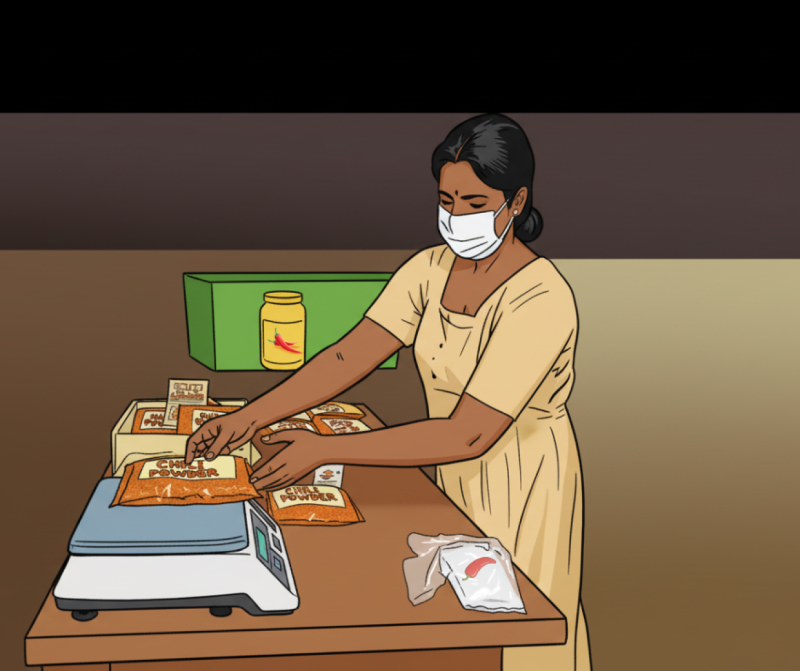
Rani is a single mother from Jaffna. She lost her husband and two brothers to the war, becoming the sole provider for her son, her parents, and her sister’s family. To support her family, Rani began making homemade chili powder and selling it to neighbours, followed by small export orders. However, without a grinder, production was slow, and rising cost of living forced her to take a second job as a saleswoman.
In collaboration with the local government authorities and the CSO partner , Rani was identified as a beneficiary of the EDRR project. She eagerly joined the entrepreneurship and skills development training sessions, where she learned practical skills to strengthen and expand her small business. As part of the support she received, Rani was provided with a grain grinder— which immediately boosted her production capacity.
With this new opportunity, she was able to build a small hut just outside her home: a clean, dedicated space where she could grind, pack, and steadily grow her business. What began as a modest effort has now started to flourish, giving Rani the confidence and tools to shape a more secure livelihood for her family.
Rani explained that a key moment for her business was when her chili powder was featured at a local Children’s Day celebration and used in community meal preparation, allowing her to reach a wider group of customers. For Rani, this moment was more than just increased sales—it was a sign that her community believed in her work and the future she was building.
Through this project, Rani also took part in business development training and peer group counselling. These sessions helped slowly rebuild her confidence, work through past traumas, and begin to envision her future with renewed resilience. “We have little power to choose what happens,” she said, “but we have complete power over how we respond.”

Rani’s story is only one among thousands supported by the EDRR project.
By 2025, the project had reached more than 4,000 people – including over 1700 women and 1500 men. Through direct livelihood assistance, nearly 1,000 people were able to begin or strengthen income‑earning activities such as small businesses, agriculture, livestock, fisheries, home gardening, and other start‑up ventures. Through entrepreneurship and skills development training and active participation in community initiatives, the EDRR project helped individuals and families rebuild their lives. At - giving them the tools and confidence to rebuild their lives the community level, reintegration was supported through essential infrastructure such as access to clean water, upgrading counselling centres, —creating safer, more supportive environments for communities. Together, these interventions not only improved day‑to‑day well‑being but also helped communities regain a sense of stability and confidence as they worked toward durable resettlement.40% of returnees reported having community-based platforms to resolve social issues, and the active involvement of women and youth in decision-making has enhanced both economic and social resilience, demonstrating that empowering local institutions is key to sustainable, socially integrated resettlement.
Across these provinces, the project recorded an exceptional overall performance of 95.8% across key indicators. While challenges remain, , the progress made has laid a foundation for communities to keep moving forward. Families like Rani’s remind us of what becomes possible when support is shaped intentionally, through partnerships that built hope, trust and confidence across all levels of society.
Originally published at https://srilanka.un.org