Image

NEW YORK — Cuts to official development assistance (ODA), core and even earmarked contributions are pushing funding for the United Nations development system to levels not seen in a decade. The trend is undermining support to millions of the most vulnerable and undercutting global development goals, according to the latest edition of the flagship UN financing report launched on Tuesday.
The product of a partnership between the UN Multi-Partner Trust Fund Office (MPTFO) and the Dag Hammarskjöld Foundation, the 12th edition of the report, Financing the United Nations Development System: Keeping the Promise, paints a sobering picture of shrinking revenues in the face of mounting global crises.
Presenting the report’s data, UN officials highlighted that real-term revenues to the UN system had already dropped by 14% between 2022 and 2024, falling to $68.3 billion. UN System Chief Executives Board (UN CEB) projections indicate that ongoing contractions could push annual revenues down to approximately $53 billion by 2027—a figure equivalent to 2015 funding levels, effectively erasing a decade of financial growth, and threatening hard-won development gains.

Dr. Björn Holmberg, Executive Director of the Dag Hammarskjöld Foundation, contextualized the scale of UN resources: “To put the figure into perspective, [$68.3 billion in UN funding] is only around 60% of the annual revenue of The Walt Disney Company,” Holmberg said, emphasizing that these resources support peace, human rights, and development across the globe.
The report connects financial shortfalls directly to human consequences. Citing a recent Lancet Global Health study, report contributor Mr. John Hendra noted that if current downward trends in development and health spending persist, an estimated 9.5 million additional deaths could occur by 2030, including 2.5 million children under five.
“Behind the funding figures are human lives.” Holmberg stressed.
In addition to declining overall volumes, the report underscores a structural challenge in the quality of UN financing. Earmarked contributions continue to dominate, accounting for over 60% of total UN system revenue, with the vast majority tied to narrow, project-specific activities. Meanwhile, voluntary core contributions have fallen from 39% of overall UN revenue in 2015, to just 28% in 2024.
Ms. Marijana Markotić, co-author of an article analyzing the UN Funding Compact, highlighted the uneven progress of donor commitments. In 2024, voluntary core funding for development from Member States accounted for just 11.6% of voluntary contributions, far short of the 30% target set for 2027 under the Compact. Inter-agency pooled funds, meanwhile, stood at 12.6%, again against a 30% target.


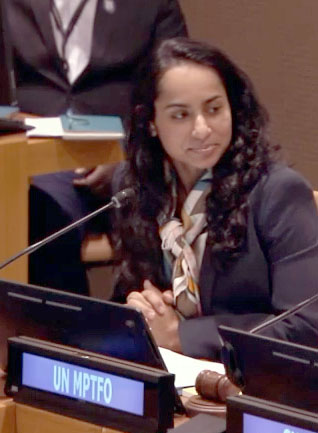
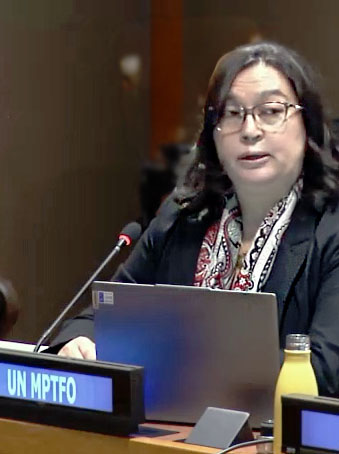
Co-hosted by the Permanent Missions of Sweden and the Republic of Zambia, the launch event brought together diplomats, UN leaders, and civil society partners.
Ambassador Charlotte Kugelberg of Sweden emphasized that funding flexibility is directly linked to performance and trust: “The question before us is not only how to mobilize resources for the UN development system; but how to ensure that the resources deliver the greatest possible impact for the people and the communities that the UN serves.”
HE Dr. Chola Milambo, Permanent Representative of the Republic of Zambia, stressed that efficiency gains alone cannot make up for deep resource deficits. “Efficiency cannot substitute for adequate and quality financing, nor should reforms become simply an exercise in managing scarcity,” Dr. Milambo said, pointing out that pooled funding remains a vital financing channel for Least Developed Countries (LDCs), which received 60% of allocations from MPTFO-administered funds in 2025.


Addressing the broader global context, Mr. John Hendra highlighted the stark disparities in spending worldwide. With global military expenditure reaching a record $2.9 trillion in 2023, the international community currently spends nearly $17 on defense for every $1 allocated to official development assistance.

Summing up the challenge, Mr. Alain Noudéhou, Executive Director of the MPTFO, called on all stakeholders – member states, multilateral entities, and non-state actors – to protect the multilateral platforms so essential to collective global action.
“Keeping the promise is not just for one side or the other; it’s for all of us,” Noudéhou stated. “If we want to have this platform, there is a minimum threshold that we need to keep an eye on to make sure the UN is sustained going forward.”
You can read more on the report here https://financingun.report/ and watch the session here https://webtv.un.org/en/asset/k17/k17uzy6agr.