Image
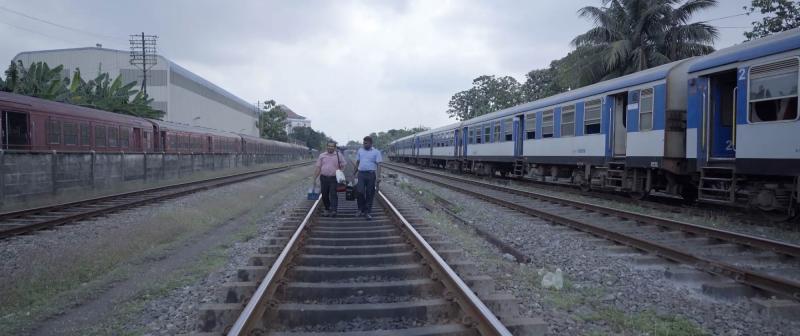

At Sri Lanka Railways, workplace forums based on social dialogue are creating a positive shift on-the ground.
COLOMBO, (ILO Story) - “There’s no issue that cannot be resolved through talking, it’s a popular saying we have. In any society, problems are bound to rise, that’s natural, but the best way to resolve these is to come together and talk it out.” Nalin Dassanayake is a long-standing employee at Sri Lanka Railways and President of the Railways’ Technical Management Officers’ Society.
For him, and many others at the Ratmalana and Maligawatta Railways Workshops, these words are not abstract wisdom but a lived reality.
This was not always the case. For years, there was little space for workers and management to raise individual or collective grievances, exchange views constructively, or feel heard and included. There was an absence of social dialogue. This frustration often festered into conflict and escalation, resulting in frequent service disruptions, affecting not only workers and management, but also the wider public who depend on reliable public transport.

“What’s changed? From what I can recall, the workplace forums have been functioning for about a year and a half now, and we’ve seen a lot of positive outcomes, workplace forums have really strengthened the relationship between workers and management,” says Disna Hansani, Progress Helper (Covering), Motive Power Sub Department.

Workplace forums (WPF) are being introduced as an alternate pathway for dispute resolution and prevention in the public sector. They bring together management and workers, including trade unions representatives, as well as other representatives for job categories and functions that are not organised under a trade union. This ensures that every voice is heard and represented equally.
S. Veeraiya, a mechanical technician at Sri Lanka Railways highlights what he sees as one of the most significant shift, “In the past, a problem would pass from one person to another before it was finally heard, and someone responded. Now, direct communication is bringing faster solutions.” Disna Hansani shares similar sentiments, “It’s easier to raise our concerns compared to before, not only in being able to bring up the issue, even if it takes a day or two, we now have the confidence and trust on receiving an answer through the workplace forum.”

Badra Kumari Ranaweera, Technical Management Assistant, recounts her experience “We previously received an attendance incentive, it was stopped abruptly. This was a cause for concern, especially at a time of high cost of living. But instead of resorting to strikes or conflict, we were able to resolve the issue peacefully through dialogue at the workplace forum.”

Established in 2022, the Ratmalana and Maligawatte workshops have 40 and 47-member workplace forums respectively, with women representation intentionally to ensure gender-responsive and inclusive decision making. Since its formation, the forums have addressed occupational and safety health challenges, significantly improving the working conditions, resolved remuneration issues, and strengthened coordination. They have also contributed to advocacy on gender-equitable recruitment, supporting a recent Cabinet decision to recruit women officers for key railway operational roles, from which they were previously excluded.
By bringing management and workers together, workplace forums are helping identify and resolve issues early, promoting constructive engagement, minimizing escalation, and ultimately enhancing public service delivery. Their benefits extend beyond workers alone to address management concerns and broader organizational challenges.

“To achieve organizational goals, we need workers who are truly committed,” says K.G.S. Bandara, Chief Engineer, Motive Power Sub Department. “That commitment is hard to build through traditional management and administration methods, even rules, orders, circulars, alone. The need is a shared space where management and workers collectively develop and implement a workplan for the organization, so everyone has a sense of ownership. Workplace forums are immensely supporting this.”

“At the end of the day, the aim of everyone, workers and management, is to provide the public with a good service. The workplace forums are playing a role in achieving that”, says Badra.
Watch how social dialogue is creating real change on the ground.
The railways workshops remain loud. Din of metal clanking, voices calling out to be heard over that, energy and sparks filling the space. The seeming chaos is a regular day here. What has softened is the noise born from unexpressed frustration and unheard grievances. In its place open dialogue is taking root, slowly being built on trust, mutual respect, and hope in the belief that problems can indeed be resolved through talking.

Building on the success and learnings from the pilot programme in Sri Lanka Railways, workplace forums are now being rolled out in priority public sectors including education, health, transport, ports, aviation, public administration, with over 64 WPFs already established. Sectoral forums are being set up to address issues that cannot be resolved at workplace level, and a national forum is also in concept stage. These efforts are supported by the UN Social Dialogue for Peace and Crisis Prevention in Sri Lanka project through capacity building and training on social dialogue, conflict resolution, inclusion, and regular facilitation and guidance at inception stage of workplace forums.
The Government of Sri Lanka-United Nations, Social Dialogue for Peace and Crisis Prevention project, is implemented through ILO, UNESCO, and UNFPA. And funded by the UN Sri Lanka SDG Fund, with support from Canada, the European Union, the United Kingdom, the UN Secretary-General’s Peacebuilding Fund and the Joint SDG Fund.
Originally published at https://www.ilo.org