Image
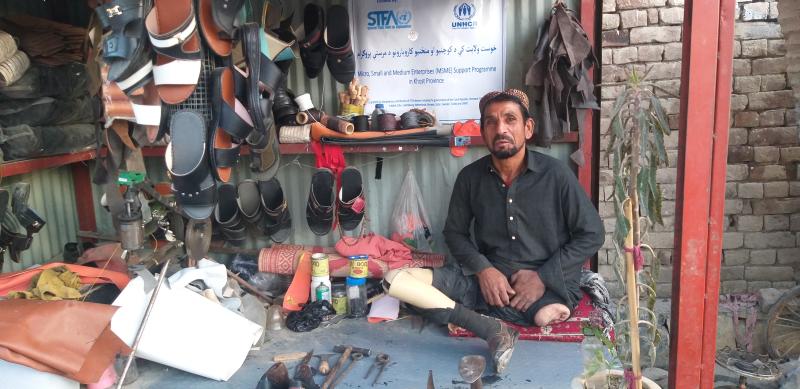

Mohammad Kazim, a 35-year-old man from Khost province, has lived with significant challenges since childhood. After losing both legs to a landmine explosion, he faced not only lifelong physical limitations but also persistent economic hardship.
Living as an IDP in a rented home, Kazim struggled to find formal employment due to his disability.
Although he learned cobbling from his father, Kazim worked informally by the roadside with limited tools and an inadequate workspace, earning too little to meet his family’s basic needs, including school fees for his children. “I felt hopeless,” Kazim said. “Even though I had a skill, I didn’t have the tools or a proper place to work. I couldn’t support my family, and I relied on others just to get by.”
In 2024, through the Special Trust Fund for Afghanistan (STFA) Joint Programme (JP), Kazim was identified for support. He received a cash grant of AFN 58,300 in two instalments, enabling him to purchase cobbling equipment and establish a functional workspace and shop. Alongside this, he completed business development and market linkage training, equipping him with the skills to run a sustainable enterprise. The intervention, located within a Priority Area of Return and Reintegration in Matun City, aimed to transition Kazim from informal roadside work to a more stable and dignified business.
The results have been transformative. With a formal shop and proper equipment, Kazim has seen a marked improvement in both his operations and income stability. Within two months of reopening his business, his monthly earnings increased from AFN 9,000 to AFN 11,500. This steady income has allowed him to meet household expenses and pay his children’s school fees. “Now I can stand on my own feet, I have a real shop, and my customers know where to find me. I feel confident again, and I can finally support my family without relying on anyone.” Kazim said.
This intervention demonstrates the value of pairing financial support with capacity-building. It highlights how skill-based entrepreneurship can empower individuals with disabilities, support sustainable livelihoods, and strengthen community reintegration in displacement-affected areas.