Image


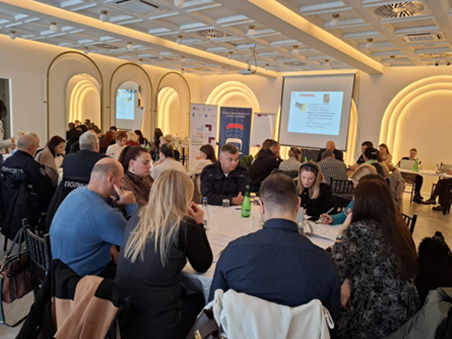
Improving the skills needed to assess risk in domestic violence cases and ensuring long-term protection for victims were the main focus of the “Safety Is Not a Choice” trainings organized by the United Nations Development Programme (UNDP) in Serbia and partners from the Ministry of Interior, the Judicial Academy, and the Chamber of Social Protection. The trainings were held throughout Vojvodina during October and November 2025.
Recognizing security risks in domestic violence cases is crucial for preventing the most serious outcomes, including loss of life. Timely and adequate risk assessment enables institutions to react quickly, prevent repeated or escalating violence, and provide victims with the protection and support needed for recovery. For this reason, the trainings aimed to strengthen the ability of institutions to identify key risks, share information, and provide coordinated action — both in emergencies requiring rapid intervention and in planning long-term safety for victims.
Why Risk Assessment Is Key to Protecting Victims
Since the adoption of the Law on the Prevention of Domestic Violence in 2017, institutions in Serbia have acted in line with clearly defined responsibilities. Representatives of the police, social welfare centers, and public prosecutors participate in Coordination and Cooperation Groups, whose task is to plan the measures taken by each institution to help stop violence. Police respond to every reported case, assess the risk of escalation, and may impose emergency protective measures such as removing the perpetrator from the home or prohibiting contact with the victim. Courts can extend these measures for up to 30 days, while prosecutors—together with social welfare centers and the police—prepare an individual protection plan to ensure the victim’s long-term safety through the application of various measures and resources available in the community.
Almost a decade of implementing this law shows that the quality of risk assessment is crucial. In the past year, police registered just over 27,000 domestic violence cases, while at least 17 women were killed — in 29% of cases through firearms misuse. Although the number of femicides in 2024 decreased compared to previous years, eight women were killed in the Autonomous Province of Vojvodina—which comprises 45 municipalities—accounting for 47% of cases nationwide. These figures point to the need for further strengthening risk assessment practices and implementing various protective measures in this particular region.
Training Based on Real-Life Cases
More than 500 professionals from police departments, social welfare centers, and public prosecutors’ offices—representing 40 municipalities across Vojvodina—took part in the trainings. The program combined analysis of cases inspired by real events with simulations of inter-institutional cooperation, with the goal of improving practical skills in handling domestic violence cases.
Police patrols and criminal investigation officers worked on enhancing their skills in responding to incidents, communicating with victims, collecting evidence, and identifying different forms of violence. Prosecutors, specialized police officers, and social workers focused on assessing complex security factors, planning long-term protection, and establishing effective cooperation between institutions.
To read the full article, please head over to its original place of publishing undp.org/serbia