Objectives
Fund scope
The Clean Air for Health and Green Growth in Armenia (EU4 Clean Air in Armenia) Joint Programme supports Armenia's efforts to improve air quality and protect public health. Air pollution remains a major environmental and health challenge in the country, contributing to premature deaths, increasing healthcare costs, and affecting economic productivity. The programme helps Armenia meet its commitments under the EU-Armenia Comprehensive and Enhanced Partnership Agreement (CEPA), relevant European Union air quality legislation, the UNECE Air Convention, the Paris Agreement, and the Sustainable Development Goals.
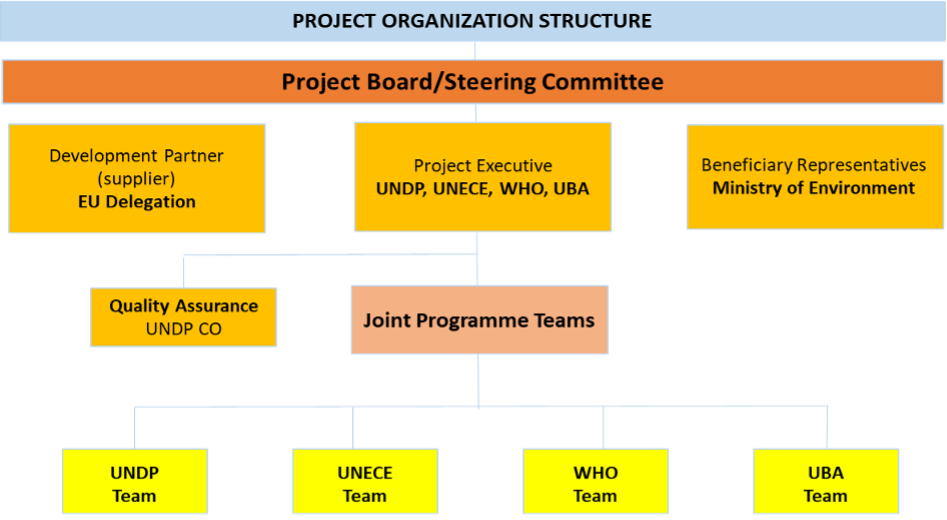
The programme is implemented over three years through a partnership between UNDP, UNECE, WHO and the Environment Agency Austria, with funding from the European Union.
Theory of Change
The programme is based on the premise that better air quality requires stronger institutions, reliable data, modern monitoring systems, effective legislation, and informed citizens.
If Armenia:
- strengthens its legal and regulatory framework for air quality management and industrial emissions;
- upgrades its air quality monitoring network and laboratory capacities;
- improves emission inventories, data management, and public access to information; and
- increases public awareness of air pollution and its health impacts,
then national authorities will be able to monitor, analyse and regulate air quality more effectively, resulting in improved environmental governance and better protection of public health.
Strategic Framework
The programme delivers three mutually reinforcing results. First, it strengthens Armenia’s legal and institutional framework for air quality management through support for approximation with EU requirements, enhanced capacities of national authorities, promotion of Best Available Techniques (BATs), and development of relevant vocational education curricula. Second, it modernizes the national air quality monitoring and management system through the upgrade of monitoring infrastructure, installation of new automatic monitoring stations, establishment of a National Reference Laboratory, and support for evidence-based air quality planning. Third, it promotes wider use of air quality data by strengthening emission inventory systems, improving public access to information, developing digital tools for real-time air quality reporting, and increasing public awareness of air pollution and its health impacts.
The programme has a total budget of approximately USD 2.47 million, financed primarily by the European Union, with additional contributions from UNDP, UNECE and WHO. Resources are invested in strengthening air quality governance, modernizing monitoring infrastructure, enhancing institutional and technical capacities, improving public access to information, and promoting awareness of air pollution and its health impacts.







 > $55M
  $55M - $25M
 $25M - $5M
 < $5M
< $5M